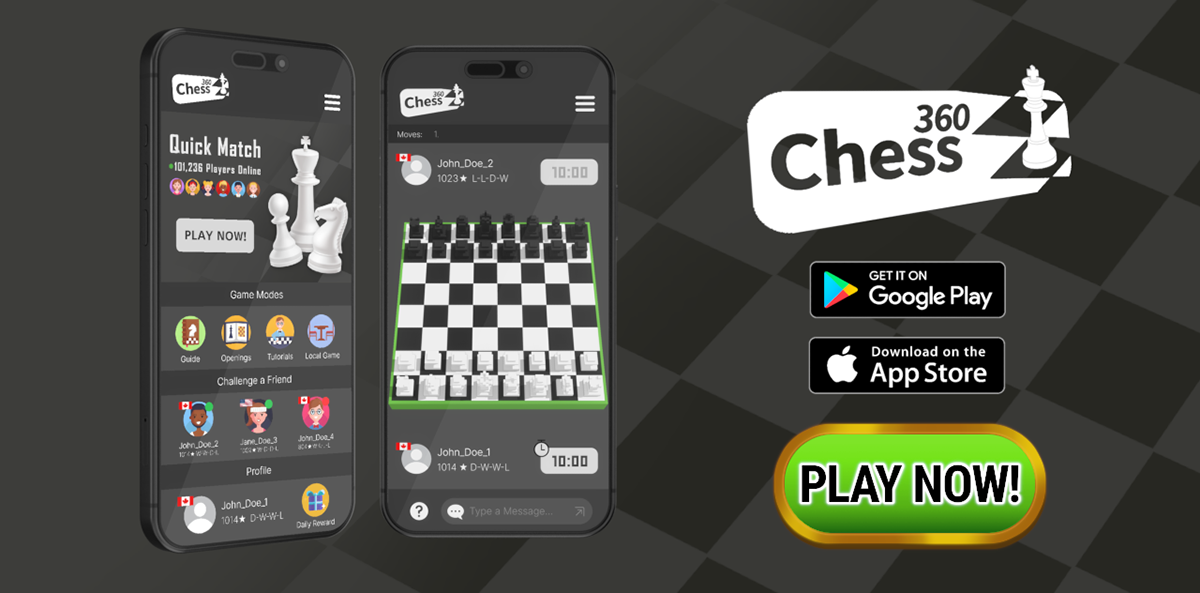
The result is an intuitive and streamlined interface that supports both beginners and advanced players by focusing on essential features only, while remaining familiar and easy to navigate for users coming from competitor apps. In addition to the app interface, I also designed supporting visual materials, including in-app banners and promotional banner ads.
▪ Drawing from my experience as an active chess player, I analyzed leading chess apps to identify their strongest usability patterns, core features, and common friction points. These insights were used to define a focused feature set and position Chess360 as a modern, streamlined alternative within a crowded market.
▪ I created and iterated on paper wireframes to define navigation, screen hierarchy, and feature placement. Multiple iterations were used to refine clarity and reduce cognitive load, ensuring the experience remained intuitive for users across different skill levels and age groups.
▪ Based on the finalized structure, I developed a cohesive visual identity by defining the color system, typography, logo, navigation icons, board and piece styles, and banner designs, ensuring visual consistency across the entire product.
▪ Finally, I translated the design into a high-fidelity, guided Figma prototype supported by reusable components and assets, allowing stakeholders to clearly understand the product vision and enabling efficient future iteration and expansion.
▪ Delivered a fully functional, guided Figma prototype that demonstrates the complete end-to-end experience, from app entry to simulating a full chess match. The prototype supports usability testing and stakeholder presentations by clearly communicating navigation, interaction flow, and overall product vision.
▪ Established a scalable UI foundation through a consistent visual system and reusable components, enabling efficient iteration, feature expansion, and a clear path toward future development.
▪ Clarified design decisions around feature prioritization and usability by translating a traditionally complex game into a focused, mobile-first experience, reinforcing the importance of simplicity and clarity when adapting legacy products to modern platforms.
(Some demos/repositories are currently unavailable)